
Our mission is to help businesses connect, protect, and derive more value from their assets. As a leading global innovator, developer, and supplier of IoT solutions, we drive continuous innovation to enable our partners to deploy confidently at scale worldwide.
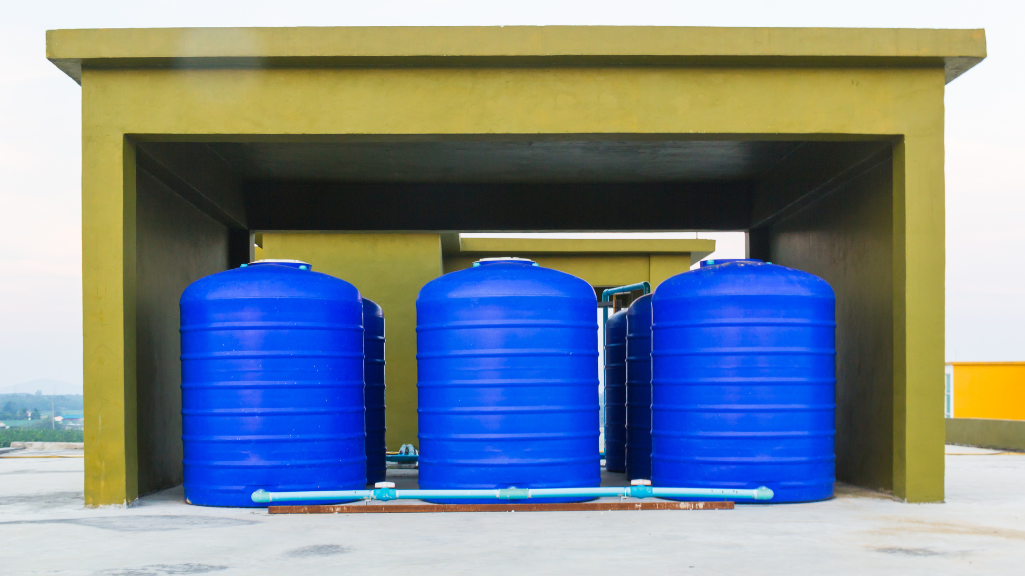
How Does Water Tank Monitoring Work?
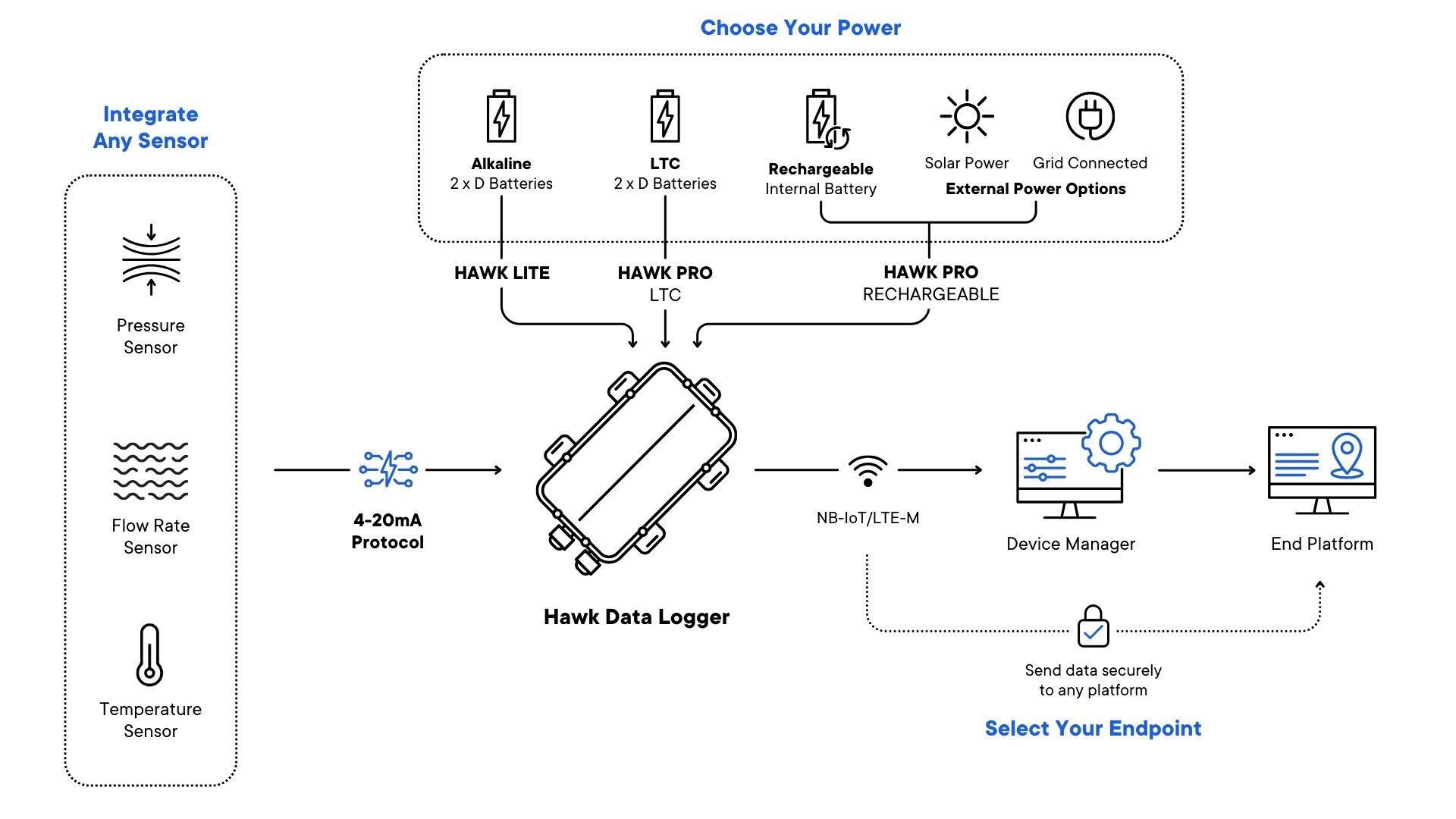
Water tank level sensors can be placed inside or on top of the tanks and wired to a data logger. The logger transmits the data over the air through connectivity options such as LTE-M or NB-IoT gateways.
The data is then collected and interpreted, usually in a cloud-based system, allowing remote reporting and analysis, ensuring prompt decision-making can be made with confidence. This enables real-time monitoring of water levels, making it easier for companies to manage resources across multiple sites.
Connectivity Options
Water tank monitoring systems can use a range of connectivity technologies, including Wi-Fi, cellular, LoRaWAN®, and satellite networks, depending on the deployment environment and coverage requirements. Cellular connectivity is often preferred for water monitoring applications because it provides broad coverage, reliable data transmission, and good penetration in many indoor and semi-enclosed locations.
For remote sites with limited or no cellular coverage, satellite connectivity can extend monitoring capabilities to isolated tanks and infrastructure. Selecting the right connectivity option depends on factors such as asset location, reporting frequency, power availability, and the level of visibility required across the water network.
Importance of Water Tank Monitoring
A reliable water tank monitoring system is important for several reasons. It ensures the precise measurement of water levels, preventing over- and underfilling. Capturing this process data delivers the accurate, real-time information needed to optimize water usage, reduce waste, and enhance operational efficiency.
The following industries rely on water tank monitoring for broad applications:
- Oil and Fuel: Monitor oil and fuel tanks to ensure they are maintained at the appropriate fuel level, preventing leaks or spills while optimizing supply chain efficiency. Using level gauges enhances safety and cost savings by avoiding environmental fines, reducing the risk of operational downtime, and providing visibility into battery status and sensor health across remote sites.
- Agriculture: Ensure irrigation tanks are adequately supplied, optimizing the use of fertilizers and pesticides, and preventing crop damage caused by too little or too much water inside. Water tank monitoring systems can also track water temperature, helping operators maintain suitable conditions for livestock and agricultural processes while improving crop yields, reducing water wastage, and lowering operational costs.
- Water Utilities: Track levels in water storage tanks to ensure an adequate supply during periods of high demand or emergencies, preventing overflows and underflows. These systems transmit data automatically to monitoring platforms, ensuring a consistent water supply, enhancing public safety, and improving resource management across distributed networks.
- Chemical Processing: Monitor chemical tanks to ensure safe and efficient operations, preventing chemical spills and optimizing the usage of expensive raw materials. Real-time monitoring and automated alerts help improve workplace safety, reduce material costs, support regulatory compliance, and ensure accurate reporting across storage assets.
Water tank monitoring helps reduce operating costs by improving water usage, minimizing waste, and preventing tanks from overflowing or running dry.
When operators have continuous visibility into tank levels, it also reduces manual inspections, giving them the information they need to respond quickly when conditions change.
Water Tank Data Loggers for Usage History
Data loggers act as the bridge between water tank sensors and the cloud, collecting sensor readings and transmitting them for remote monitoring, reporting, and alerts.
Why the Hawk for Water Tank Monitoring
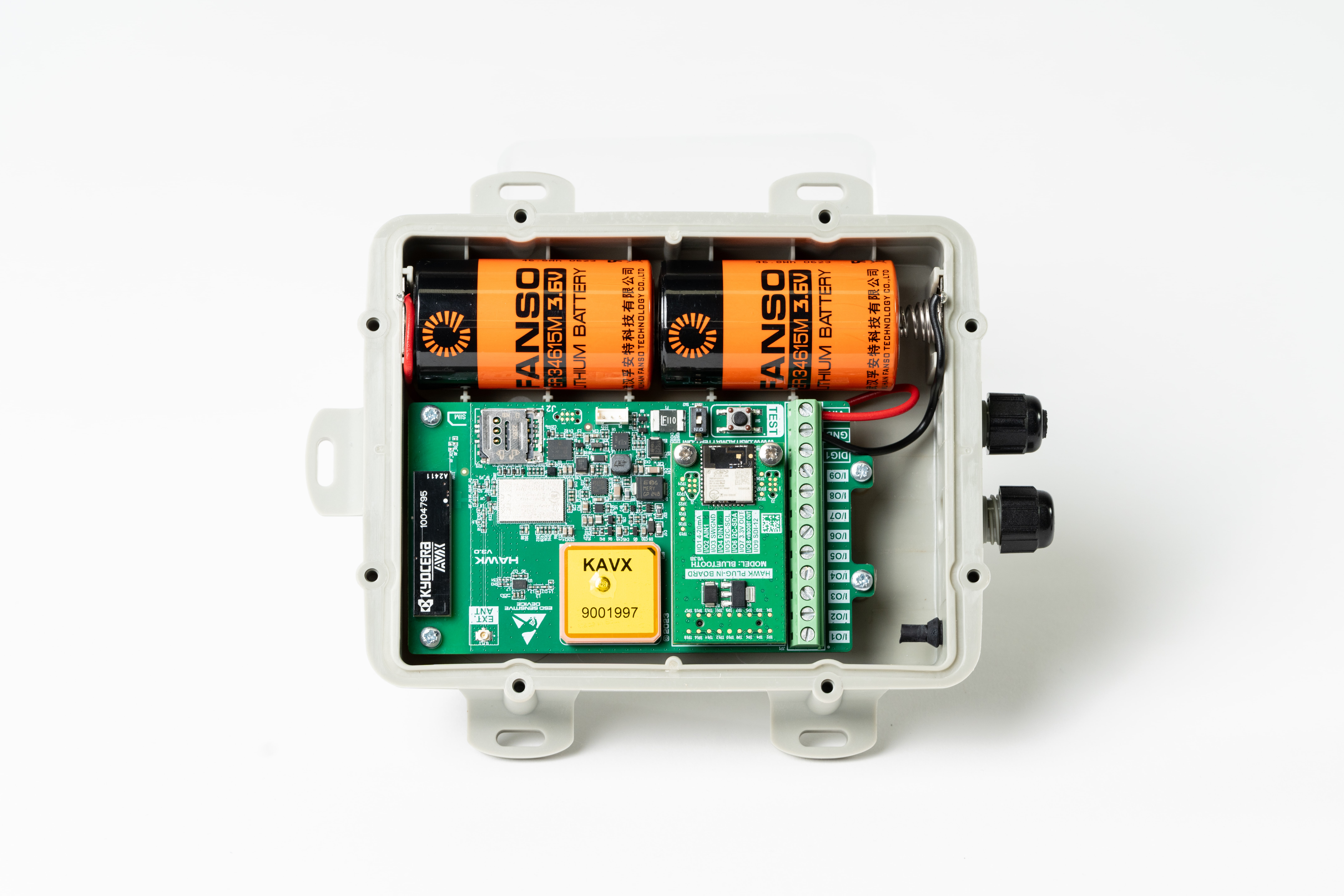
The Hawk is an advanced data logger for water tank monitoring, making it a top choice for effective water management. Below are some of the key features for the Hawk:
- Near Real-Time Data Access: The Hawk provides near real-time access to water tank data, making it a powerful IoT solution for liquid level monitoring. Simple to operate, users can easily check current water levels, temperature, and usage trends, ensuring timely interventions are made and tanks stay within optimal conditions.
- Automated Alerts and Notifications: The Hawk is a smart device that can be easily configured to send out custom alerts when critical conditions pop up, like low water levels or signs of a potential leak. For example, if a tank's level drops below a set threshold, it can instantly notify the right person so they can act fast. It's all about keeping you in the loop and making sure issues are handled before they become bigger problems.
- Powerful Battery Life: The Hawk Pro is compatible with high-capacity LTC batteries or with a large internal rechargeable LiPo battery for use with external mains or solar power supply. The Hawk Lite is a low-cost, low-power option using affordable, lower-voltage alkaline batteries. Both the Hawk Pro and Hawk Lite feature an ultra-low-power design for maximum battery life.
Compatible Water Tank Sensors
The Hawk's design allows for the integration of almost any sensor, providing a customized monitoring solution.
Available Input Options Include:
- Digital Inputs
- Analog (0-30V) inputs
- 4-20mA
- Bluetooth®
- I2C
- 1-wire
- SDI-12
- RS232
- RS485
Visit our Knowledge Base to view a list of compatible sensors
Summary
Water tank monitoring is utilized by a wide variety of industries to contribute positively towards resource optimization, waste management and cost control. By using data loggers like The Hawk, the ability to capture accurate, real-time data becomes a reality.
Learn more about how The Hawk can enhance your water tank monitoring processes, or contact us to discuss your specific requirements and explore our full range.


.png)
.jpg?width=352&name=Untitled%20design%20(3).jpg)
-1.png?width=352&name=Blogs%20(21)-1.png)
-1.jpg?width=352&name=Untitled%20design%20(5)-1.jpg)